Content:
- The concept of clean rooms in the cosmetics industry.
- Stages of air preparation for clean rooms.
- HEPA filters: purpose and operating principle.
- Operation and maintenance of filtration systems.
Cosmetics and perfume manufacturing are characterized by increased air quality requirements. Most processes are carried out in clean rooms. Therefore, it is important to organize multi-stage air purification in cosmetics manufacturing and the perfume industry.
The concept of clean rooms in the cosmetics industry
The quality of cosmetics and perfumes depends not only on the raw materials and technologies used in production. It can also be negatively affected by foreign substances present in the air. Therefore, current industry standards require the creation of so-called clean rooms. These are spaces where the following are monitored:
- solid inclusions — dust, plant or animal components;
- microbiological contaminants — bacteria, microbes, viruses, fungi;
- aerosol particles;
- chemical substances.
Their permissible content depends on the specifics of the production process and the class of the room. There are only four classes: A, B, C, and D. However, regardless of the requirements and permissible concentrations, thorough preparation of the air for clean rooms is an unambiguous condition. For this purpose, a special multi-stage purification system must be developed.
Stages of air preparation for clean rooms
The air purification system in perfume production must comply with industry standards and sanitary and hygienic norms. Most often, it includes three stages:
- Coarse purification. Necessary for capturing the largest (larger than 10 microns) solid particles: dust, insects, etc. This preliminary stage helps to extend the service life of fine purification filters;
- fine purification. The inclusion of such filters in the air purification system for cosmetic workshops ensures the removal of contaminating particles up to 0.4 μm in size. Among other things, they are capable of capturing plant pollen and some bacteria.
- Ultra-fine. ULPA and HEPA filters are used for this purpose in production. They are highly effective at trapping particles ranging in size from 0.1 to 0.3 microns.
In addition to mechanical air filtration, chemical purification and the capture of gaseous pollutants can also be carried out.
HEPA filters: purpose and operating principle
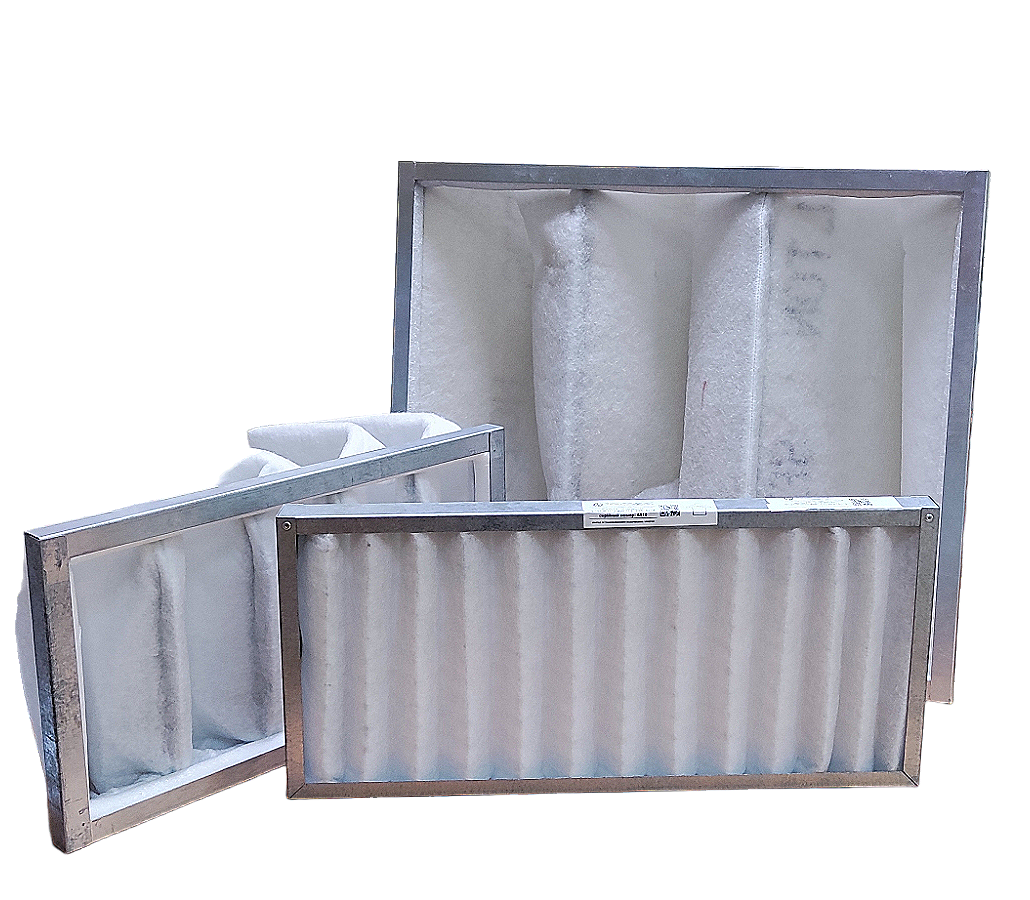
Modern compact HEPA filters for clean rooms are compact devices that can be integrated into ventilation systems. They are based on modern filter material with a fibrous structure. Most often, industrial filters are made from paper or microglass fiber with a fiber diameter of 0.65-6.5 microns. To increase the working surface, the filter material is folded into waves or accordion pleats (this process is also called “corrugation”). The finished filter pack is placed in plastic or metal frames.
HEPA filters work based on three physical processes:
- interception or entrapment. This happens when air flows through the filter. Particles stick to the fibers and stay on the material. Then, the contaminants can stick to each other;
- diffusion. This process is typical for small particles. They are in constant chaotic motion. When they collide with the fibers of the filter material, the contaminants are fixed and remain on them;
- inertia. Relatively large particles are unable to change their trajectory. They collide with the fiber, which becomes an obstacle for them, and are retained on it.
As can be seen, all processes lead to the accumulation of contaminants on the filter material. Therefore, in order for air filtration in the production of cosmetics or perfumes to remain effective, it is important to maintain the cleaning system in a timely manner.
Operation and maintenance of filtration systems
Failure of filtration equipment leads to deterioration of the microclimate in clean rooms. This can cause defects. To prevent this from happening, it is important to follow the rules for operating and maintaining the systems, namely to carry out the following in a timely manner:
- inspection of equipment, checking its functionality and performance, monitoring the tightness of air ducts;
- checking the condition of filters. If damage is found, promptly install new ones;
- regularly replace filter elements in accordance with the developed plan and manufacturer’s recommendations.
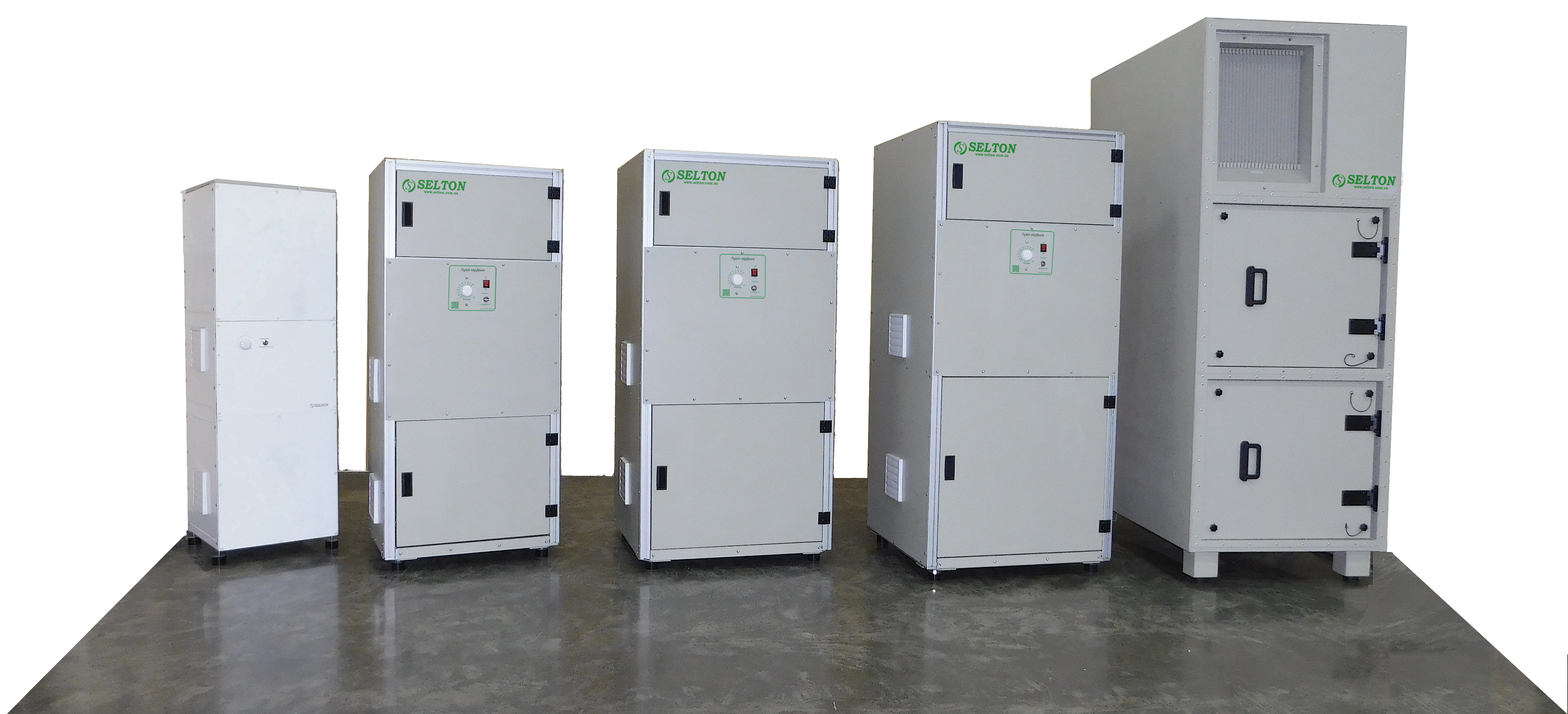
If you are interested in compact filters for ventilation or ventilation systems for your production from a Ukrainian manufacturer, we invite you to take a look at our range. If necessary, the company’s specialists will provide professional consulting support, help you choose the optimal equipment models, or offer a ready-made comprehensive solution for the customer’s production.