Content:
- The Problem of Prolonged Power Outages and Their Impact on Safety in Shelters.
- Energy Requirements for Selton Plants.
- Choosing an Alternative Energy Source: Which Is Better??
An uninterrupted power supply for shelter systems is essential for their normal, full-fledged operation. However, frequent blackouts and rolling blackouts make it necessary to address the issue of selecting alternative energy sources. After all, in such conditions, non-electric ventilation in a bomb shelter is particularly important. The Ukrainian manufacturing company “Selton” is ready to assist with the selection of filter-ventilation equipment and corresponding uninterruptible power supply (UPS) units.

The Problem of Prolonged Power Outages and Their Impact on Safety in Shelters
Prolonged power outages negatively affect the safety performance of shelters and protective structures. First and foremost, they result in a lack of lighting and disruptions to mobile communications and internet service. They also affect the operation of ventilation systems. The lack of a stable power supply leads to interruptions in the operation of supply and exhaust ventilation systems and local air purification equipment. This can result in:
- a deterioration in indoor microclimate conditions. Temperature and humidity gradually rise, while the concentration of oxygen in the air decreases;
- a feeling of suffocation and discomfort;
- deterioration in the well-being of people in the shelter, including headaches;
- poisoning by carbon dioxide or carbon monoxide. These gases are produced during respiration, when diesel or gasoline generators are running, and when using candles or gas burners, etc.
Energy Requirements for Selton Plants
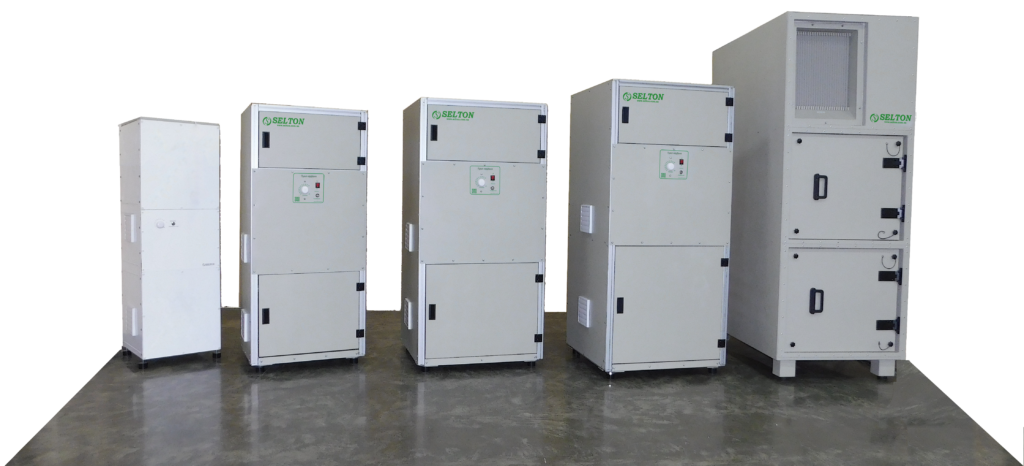
The Ukrainian company “Selton” designs and manufactures high-performance filter-ventilation units, which are also characterized by effective filtration, the ability to purify air of various contaminants, and energy-efficient operation. Energy consumption depends on the model, its power rating, and operating mode. For example, increased energy consumption may be caused by the need to heat the purified air or other additional requirements.
Energy Performance Certificate for the “Selton” CFS-5 and CFS-10 Units
| Parameters | CFS-5 | CFS-10 |
| Flow rate in filtration mode, m³/h | ≤ 300 | ≤ 350 |
| Airflow rate in filter ventilation mode, m³/h | ≤ 100 | |
| Power Supply | 220В, 50 Гц | |
| Power consumption, kW | ≤ 0,3 | ≤ 2,3 |
Important! To ensure that the storage facility’s ventilation system operates reliably and without interruption, it is essential to select an appropriate backup power source. It must meet the system’s power requirements, taking peak loads into account. At the same time, a certain margin must be built in. Typically, this margin is at least 20% of the rated power. In other words, if the system requires 1 kW of power, a 1.2 kW uninterruptible power supply (UPS) will suffice.
Choosing an Alternative Energy Source: Which Is Better?
The modern Selton CFS-5 and CFS-10 systems can be powered by various sources. Each option has its own advantages and disadvantages. It is important to consider them while evaluating your options in order to make the right choice.
Diesel or gasoline generator. This is the optimal solution for ensuring an uninterrupted power supply to sufficiently powerful equipment and the shelter as a whole. Moreover, a gasoline generator is easier to start in cold weather and is smaller and lighter. A diesel generator, on the other hand, offers longer continuous operation and a higher service life. However, these power sources are quite noisy during operation and must be installed outdoors because their operation produces harmful gases. This adds operational complexities related to the need to leave the shelter in case of danger, as well as the need to learn the specifics of operating and maintaining the generator.
Battery packs + Inverter (LiFePO4). Modern, eco-friendly equipment that offers high reliability. This autonomous backup power system produces no additional noise and operates without emitting harmful gases. Its service life can reach 10–15 years. The disadvantages of this energy source include a significant initial cost and the need for professional installation.
A filter-ventilation unit can be equipped with a built-in power source (battery), which will ensure its operation during power outages. This ensures the unit’s operational readiness during rolling blackouts.
If you need effective filter-ventilation units for a civil defense facility or other structure, please contact our specialists. They will help you select the optimal model, recommend necessary additional options, and suggest ways to ensure an uninterrupted power supply for the shelter’s equipment.